Why I’m building a Golod Pyramid ?
Why I’m Building a Golod Pyramid I do not build things speculatively. If I am going to spend time and money on a structure, I want to understand what it is supposed to do and why the geometry matters. For pyramids, that took years of research before I was ready to commit. What finally pushed…
Why I'm Building a Golod Pyramid
I do not build things speculatively. If I am going to spend time and money on a structure, I want to understand what it is supposed to do and why the geometry matters. For pyramids, that took years of research before I was ready to commit. What finally pushed me was not one piece of evidence but the accumulation of several things that pointed in the same direction.
This post is my account of that research and what I am actually building. It is not a sales page. It is a practitioner explaining a project.
The Geometry: This Is Not the Egyptian Angle
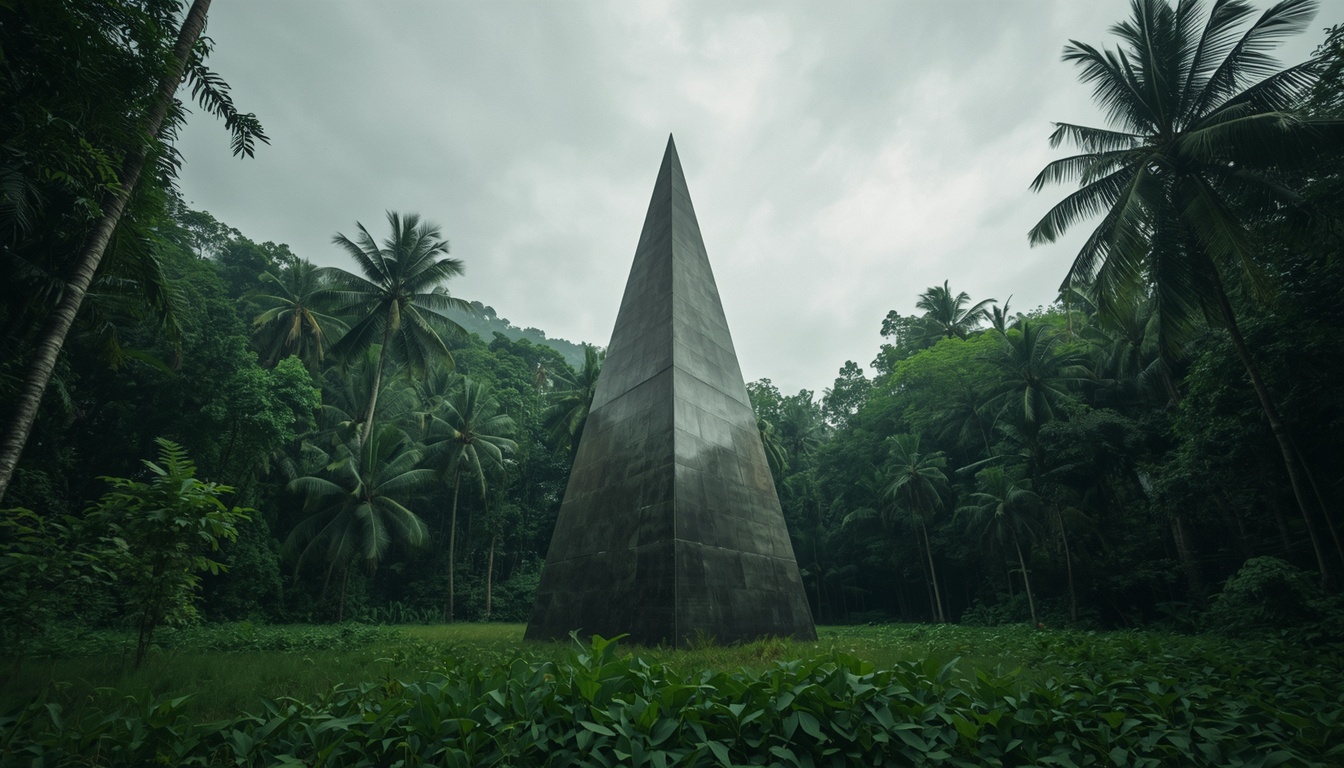
Most people picture a pyramid and assume the Egyptian proportions: the 51.83-degree slope of the Great Pyramid. The Golod pyramid is a different form entirely. The slope is steeper: 76.345 degrees from horizontal. The height-to-base ratio is 2.058 to 1.
This is not an aesthetic choice. The geometry comes from phi, the golden ratio (approximately 1.618). The slope angle of each face is derived from arccos(1/phi³). Every key proportion in the structure traces back to this one relationship.
For my outdoor build, the base is 3 metres and the height comes to 6.174 metres. That is a significant structure. You do not put something like that up without being sure of what you are doing.
Alexander Golod: Who He Is and What He Found
Alexander Golod is a Russian engineer and scientist who began building large fiberglass pyramids in the early 1990s. His largest structure reached 44 metres. Over two decades he conducted systematic experiments at these sites, documenting effects on biological systems, agricultural yields, the crystal structure of certain materials, and water behaviour.
His work is empirical and detailed, even if it has not appeared in mainstream peer-reviewed journals. The research spans controlled biological trials and consistent field observations across multiple sites. The pattern of results is what made me take it seriously: effects repeated across different experiments and different researchers in the same environment.
The fiberglass construction is deliberate. The pyramid must be entirely metal-free. Metal inside or through the structure disrupts the field it generates. This shaped my own build choice directly.
The Negative Green Problem
There is a problem with pyramids that took me a long time to take seriously, and then I could not ignore it. Chaumery and de Bélizal, French radiesthesia researchers working in the mid-twentieth century, identified that the faces of a standard pyramid emit a frequency they called Negative Green. This is a high-penetrating form of subtle energy that is harmful in prolonged exposure. Extended time near an active pyramid face is not something you want without addressing this.
The solution came from research into pyramid geometry and harmonic proportion design. A slight concave indentation on each pyramid face corrects the emission. The concave geometry neutralises the Negative Green output at the face surface while preserving the field effect inside the pyramid.
For my granite tabletop pyramid (the personal instrument I am building first), I am grinding a concave curve into each face as part of the finish process. For the larger outdoor PVC structure, I am addressing this differently: through the field geometry of the space itself and the instruments placed within it.
I want to be clear about what this means: a pyramid without this correction is not something I would place in a living space. This is not a precautionary addition. It is a necessary one.
The Lakhovsky Connection
The Lakhovsky principle (that living cells resonate at broad-spectrum frequencies and can be supported by an external oscillating field) is already part of my instrument work. The Radionic Harmonizer Cube includes a Lakhovsky multi-wave antenna as one of its components. The principle there is cellular resonance: providing a wide-frequency oscillating environment that the cell's own oscillator can lock onto.
A Golod pyramid creates a coherent field environment that complements this same principle. The geometry concentrates and structures subtle energy in the interior space. A practitioner's instrument placed at the centre of that field works in a different ambient condition than one placed in an ordinary room. That is what I am testing. The full Lakhovsky connection deserves its own post, and I will write it separately.
What I Am Actually Building
There are two builds running in parallel.
The first is a granite tabletop pyramid. The base is 304mm. Material is Absolute Black Granite, mirror-polished. The slope follows the Golod angle exactly, with the concave face correction ground into each face. The interior will hold my 160mm Radionic Harmonizer Cube (my primary field instrument) placed at centre. All interior surfaces will carry symbol panels. Crystal and stone fill complete the interior configuration. This is the research instrument I will use first, before the outdoor structure is complete.
The second is the outdoor pyramid at the studio site in Valle del Lunarejo National Park, Uruguay. Three-metre base. The frame is 75mm PVC pipe with 2.5mm wall thickness, approximately 38 metres of pipe total. All joints use solvent cement with fiberglass epoxy reinforcement. No metal anywhere in the structure. Two people can raise it without scaffolding using an A-frame erection sequence. The site is inside the national park, fully off-grid, with no measurable electromagnetic fields of human origin. That clean field baseline is not a background detail. It is a deliberate research condition.
The EMF-free environment matters because artificial electromagnetic fields introduce field noise that you cannot control for. When I am trying to map what a pyramid does to a subtle energy field, I need to know that any change I measure came from the pyramid and not from a nearby power line or Wi-Fi router. I do not have that problem here.
What Happens After the Build
The first thing I do after both structures are complete is field mapping with the Aurameter. I will take baseline measurements at multiple points inside and around each pyramid before any instruments are placed inside, then again with the Harmonizer Cube at centre. I want a clear before-and-after comparison of the field profile.
I will then compare the pyramid interior field with the field profile of the Harmonizer Cube operating in open space. If the pyramid is doing what Golod's research suggests, the interior field should show a measurably different quality. That is a testable question and I intend to test it.
This is a research project. The structure going up in the park is not decoration. It is an instrument and a laboratory at the same time.
Why Now
I have been working with radionics and subtle energy instruments for more than thirty years. In that time I have learned to distinguish between things that have explanatory frameworks I can work with and things that are interesting but not yet understood well enough to act on.
Golod's geometry has a clear derivation from phi. The Negative Green correction has a documented mechanism in harmonic proportion research. The Lakhovsky connection links to a principle I am already applying. The EMF-free site removes the main confounding variable. Everything lines up in a way I can justify to myself as a researcher, not just as someone who finds pyramids interesting.
That is when I build things.
The instruments built in this studio are available at lunarejo.studio. If you have questions about this project or the research behind it, get in touch.